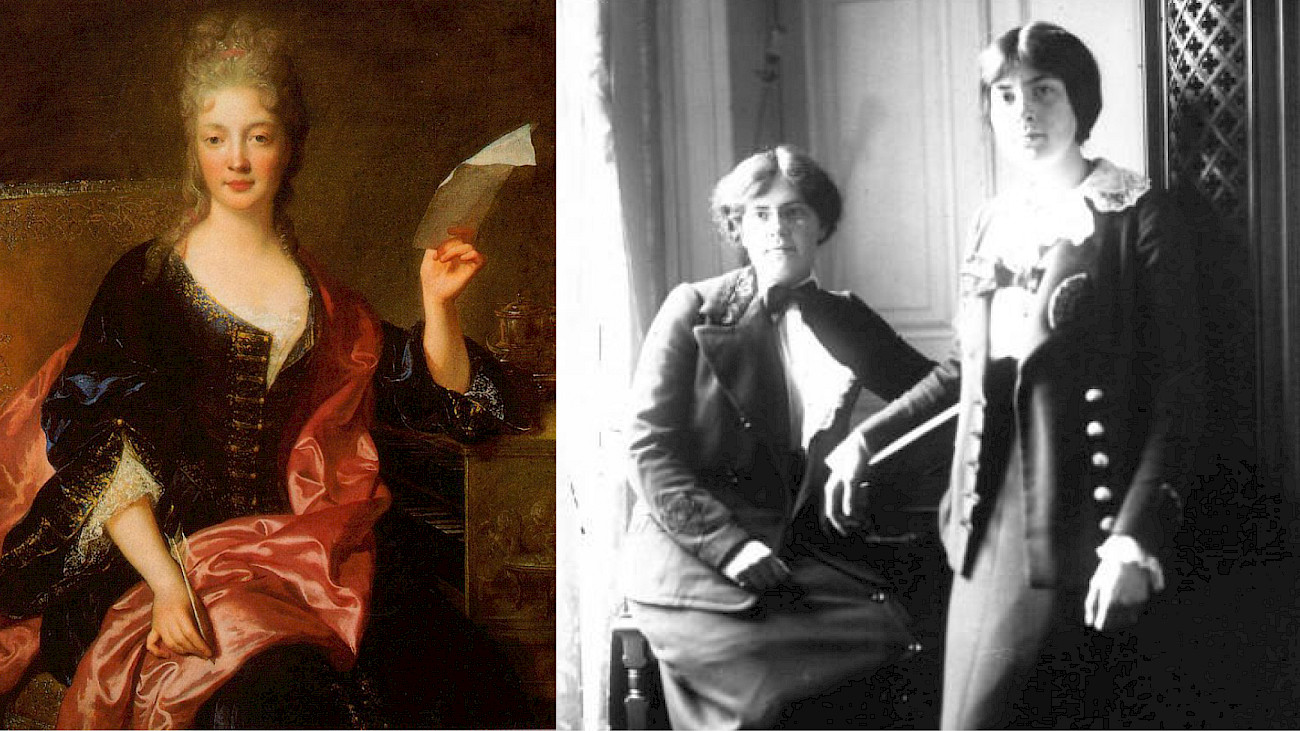
Élisabeth-Claude Jacquet de la Guerre, Nadia & Lili Boulanger (Fotos: Wikipedia)
French women composers

The exceptions to the rule

This season, the chamber music lunch concerts pay homage to France - and also focus on five female composers.

Susanne Kübler

Talent is one thing - the opportunity to develop it is something completely different: this is particularly evident in the history of music. Statistically speaking, it can be assumed that there must have been women who were similarly talented at the time of Bach, Beethoven or Berg. However, even those who received a musical education hardly had the chance to perform their works outside of a domestic musical setting, to gain experience on major stages and to work with important interpreters until well into the 20th century. It is therefore no coincidence that most female composers primarily wrote chamber music. Nor is it a coincidence that many tended to orientate themselves stylistically towards the past: those who are not involved in current discussions have little to contribute. The dream of discovering the legacy of a female Mozart somewhere in an attic will therefore unfortunately remain a dream.

What could have been: But at least those exceptions to the rule, which certainly existed, show that. And you can hear it more and more often, because female musicians and organisers have long since begun to bring works by female composers out of obscurity; in the meantime, musicians and organisers are also increasingly interested in their work. And it is no longer necessary to delve into the archives for every discovery, as various publishers are taking part in this renaissance.

In recent months, musicians from the Tonhalle-Orchester Zürich have also been exploring this repertoire. This is because the theme of the chamber music lunch concerts they are organising, which this year is "Homage to France", had an additional note in brackets in the announcement: (with a focus on French female composers).

"Wonders of our century"

One of these female composers is Élisabeth-Claude Jacquet de la Guerre (1665-1729). She is a prime example of the exceptions mentioned above: As the daughter of a musician, she received the same education as her brothers - and had an extra portion of luck to boot. As a five-year-old child prodigy, she was allowed to demonstrate her harpsichord skills to the Sun King Louis XIV, who was so enthusiastic about her that he supported her for the rest of her life. Under the care of his mistress Madame de Montespan, he provided her with a solid aristocratic education at court, where she regularly performed as a celebrated interpreter and improviser. He also financed the publication of her works and provided her with performance opportunities, which in turn brought her public attention: in the magazine "Le Mercure Galant", for example, she was celebrated as the "merveille de notre siècle", the "miracle of our century".

in 1684, she married a musician, became a mother and left Versailles, but the contact remained: This is indicated by the fact that she dedicated all her works to the Sun King until his death. This included her only opera "Céphale et Procris", which was premiered in 1694 at the Palais Royal, the main venue of the Paris Opera at the time. Although it was not a great success at the time, it was a sensation from a music-historical perspective: it would be several centuries before a female composer was able to perform on a similarly large stage.

Her chamber music works also reflect the targeted support she received: Élisabeth-Claude Jacquet de la Guerre was one of the first to contribute to the trend of enriching the French style with Italian influences. The trio sonata that Elisabeth Bundies selected for the first chamber music lunch concert also shows how musically up to date she was: "The way she deals with dissonances and the unexpected harmonic turns reveal a lot about her self-confidence," says the violinist. The same applies to the length of this work: "It lasts around eight minutes, whereas other French Baroque composers have only written miniature pieces."

"Undeniable superiority"

Around 200 years later, the sisters Nadia and Lili Boulanger (1887-1979 and 1893-1918 respectively), who can be discovered in two further lunch concert programmes, received similarly ideal support. They too had well-connected musical parents, and their family friends included composers such as Camille Saint-Saëns and Charles Gounod. The sisters received organ lessons from Louis Vierne and composition lessons from Gabriel Fauré. And the results were not long in coming: for example, both were awarded the coveted Prix de Rome.

Lili Boulanger, the younger of the sisters, was the first female composer ever to receive it in 1913. Émile Vuillermoz described what this must have meant in the magazine "Musica" at the time: the 19-year-old had impressed "with aplomb, tempo and lightness; which left the other candidates somewhat bewildered, as they had been sweating blood and water for years to approach the prize undaunted". The victory was hard-earned, as "the jury's misogyny was well known". Accordingly, her cantata was heard "with merciless attention", "which in this atmosphere gave it the status of an impressive and threatening feminist presentation. And it took the overwhelming and undeniable superiority of this work by a woman to triumph over the homework of the students in whose company she found herself".

Christian Proske, deputy principal cellist, is also impressed by Lili Boulanger, "especially by how progressive she was in her compositions: In the piano trios 'D'un soir triste' and 'D'un matin de printemps', which we are playing, she had actually already left Impressionism behind her and was leaning very much in the direction that later characterised the music of the 'Groupe des Six' around Francis Poulenc, Darius Milhaud and Germaine Tailleferre." This raises the question of what could have become of her: "But unfortunately, these works are among her last." In March 1918, the composer, who had suffered from chronic bronchopneumonia and Crohn's disease all her life, died at the age of just 24.

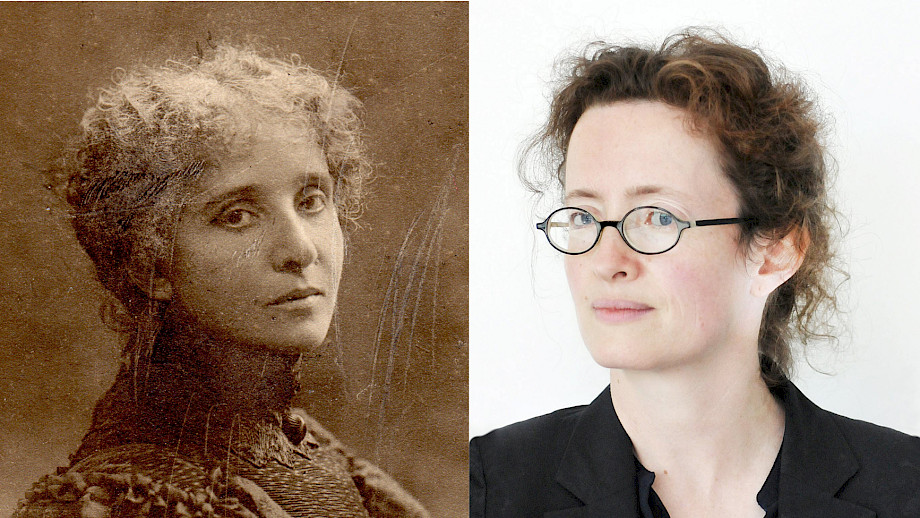
Mel Bonis, Claire-Mélanie Sinnhuber (Fotos: Wikipedia, Josef Alvar)

Her sister Nadia, whose three pieces for cello and piano can be heard in another programme, took a much longer route: She was 92 years old, managed a successful career as a pianist, a remarkable one as a composer and a pioneering one as a conductor. Above all, however, she was one of the most sought-after music teachers of the 20th century: her pupils, whom she endeavoured to teach not only technical skills but above all musical independence, included Aaron Copland and Astor Piazzolla, Grażyna Bacewicz and Quincy Jones (who later produced Michael Jackson's album "Thriller", among others), Stravinsky's son Swjatoslaw Sulima and Philip Glass.

A career with interruptions

Three decades before the Boulanger sisters, another female composer also had a promising start to her career, which then developed into a typically female obstacle course: this was Mel Bonis (1858-1937), whose real name was Mélanie, but who deliberately published her works under the shortened first name that could no longer be identified as female. She was supported early on by César Franck and was a fellow student of Claude Debussy - until her parents urged her to abandon her studies because of a love affair with a singer and marry a twice-widowed industrialist 22 years her senior.

Mel Bonis then raised his five children and officially became a mother of two herself. She had to leave a third child from her secret relationship with the singer, whom she had met again years later, to foster parents; however, she remained in contact with this daughter as a "friend of the mother". It was not until she was over 40 that she began composing again, won competitions, impressed Camille Saint-Saëns and was the first woman to be elected secretary of the French Société des compositeurs de musique. She created over 300 works, many of them for piano or chamber music ensembles. However, they were rarely performed in her time. "My great sorrow: never hearing my music," she wrote in a letter to her daughter.

At least the Zurich audience can now hear her music in one of the chamber music lunch concerts, specifically her Pièce op. 189 for flute and piano, which harpist Sarah Verrue has arranged for flute and harp. There is also "Un soir de septembre" for soprano, flute, viola and harp by another Mélanie, namely Claire-Mélanie Sinnhuber: she was born in 1973 - and can of course publish her works under her full name.

January 2026
Thu 08. Jan
12.15

Chamber music lunch concert

Lisa Larsson Sopran, Sabine Poyé Morel Flöte, Gilad Karni Viola, Sarah Verrue Harfe Duparc, Bonis, Sinnhuber, Fauré, Debussy
April
Thu 09. Apr
12.15

Chamber music lunch concert

Diego Baroni Klarinette, Elisabeth Harringer-Pignat Violine, Ulrike Schumann-Gloster Violine, Viola, Katja Fuchs Viola, Gabriele Ardizzone Violoncello, Hendrik Heilmann Klavier Boulanger, Françaix, Jones, Copland, Adès
December 2025
Thu 04. Dec
12.15

Chamber music lunch concert

Andreas Janke Violine, Katja Fuchs Viola, Christian Proske Violoncello, Yoshiko Iwai Klavier Boulanger, Adès, Fauré
September
Thu 25. Sep
12.15

Chamber music lunch concert

Elisabeth Bundies Violine, Isabelle Weilbach-Lambelet Violine, Christian Proske Violoncello, Johannes Ötzbrugger Theorbe, Thys Grobelnik Cembalo Leclair, Boismortier, Grobelnik, Couperin, Guerre
published: 16.09.2025

Tags